What Is Kiln Formed Glass? A Specifier’s Guide for UAE Interiors
What Is Kiln Formed Glass? A Specifier's Guide to Fused, Cast, Slumped and Textured Glass in UAE Interiors
Kiln formed glass is glass shaped by heat and gravity in a kiln. A flat sheet softens over a mould and takes its shape, creating textures like hammered, rippled and ribbed. Fusing, slumping and casting are the main methods. In the UAE, building glass must be tested to BS EN 12600. So what is kiln formed glass in real projects? Think of kilnformed glass as a surface you can feel, not just see. Designers often ask about the difference between fused and slumped glass. Fused glass joins pieces together, slumped glass sags into a mould, and cast glass (what is cast glass? glass melted into a mould) goes one step further. Is hammered glass kiln formed? Not always. Hammered glass, rippled glass and ribbed glass describe the look, and kiln forming is one way to get real relief, so how textured glass is made depends on the supplier. At GLAZART Dubai, KilnArt by GLAZART is made-to-order glass Dubai teams can rely on, and the GLAZART KilnArt range suits decorative glass UAE projects of every size. It works well as kiln formed glass for feature walls, textured glass partitions, ribbed glass for frameless doors and rippled glass vanity tops. Custom glass textures UAE clients ask for are available too. How thick is kiln formed glass? GLAZART's textures go up to 15mm. Can kiln formed glass be used for flooring? It's listed as an application, but the project engineer must confirm it. Does textured glass need BS EN 12600? Yes, under the BS EN 12600 UAE rules and the UAE Fire & Life Safety Code glass requirements. Whether you're after textured glass Dubai or kiln formed glass Dubai, a kiln formed glass specification guide helps. As a decorative glass supplier UAE firms trust for architectural glass UAE work, GLAZART gives glass for interior designers UAE and glass for fit-out contractors Dubai a clear route from sample to site.
You've seen a hammered, rippled or ribbed glass sample and loved it. Then the questions start. Is it fused glass or cast glass? What does "slumped" mean on a spec sheet? Will it pass safety review, and will it still look right once it's installed?
Kiln formed glass answers the design question and raises a few technical ones. This guide explains the terms, the textures and where each works. It also lists what UAE design teams should check before specifying. It's written for interior designers, architects, fit-out contractors, interior contractors, general contractors and technical services companies.
Key Takeaways
- Kiln formed glass is shaped with heat and gravity in a kiln. Fusing, slumping and casting are the main methods.
- Hammered, rippled and ribbed finishes are textures. Kiln forming is one way to make them.
- The UAE Fire & Life Safety Code requires building glass to be tested to BS EN 12600, per Element.
- Textures may not line up from panel to panel, so plan the layout before you order.
What: Glass shaped in a kiln by heat and gravity, with a textured or sculpted surface Also called: Warm glass, kiln-formed glass, kilnformed glass Includes: Fused glass, slumped glass, cast glass Textures: Hammered, rippled, ribbed and more than 20 standard patterns (GLAZART KilnArt) UAE rule: Building glass tested and classified to BS EN 12600 Made: To order in Dubai by GLAZART
What Is Kiln Formed Glass?
Kiln formed glass is glass shaped by heat in a kiln. It's also called warm glass. The processes range from fusing and slumping to casting, depending on how hot the glass gets.
GLAZART describes kiln forming in simple terms. A flat piece of glass sits over a mould. As it softens, it gently falls and takes the mould's shape. GLAZART fires its KilnArt panels to 770°C using its own mould technology (KilnArt).
The result is glass with real relief. You can feel the surface and see light bend through it. Flat float glass can't do that. A printed or etched pattern can imitate the look, but it can't match the depth.
Fused, Cast and Slumped Glass: What's the Difference?
The three terms describe how far the glass moves in the kiln. Here is the usual way to separate them:
- Fused glass. The glass keeps its shape but turns sticky, so neighbouring pieces join together.
- Slumped glass. The glass softens and sags into or over a mould. It stays roughly solid.
- Cast glass. The glass melts into a thick liquid and takes the shape of its mould.
Which one is KilnArt? GLAZART's description, glass softening over a mould under heat and gravity, is what the trade calls slumping. Casting and fusing are different routes with different results. If your drawings call for a cast block or a fused multi-colour panel, ask the supplier whether it's offered before you issue the spec.
Don't assume the terms are interchangeable on a submittal. A "fused" panel and a "slumped" panel behave differently in thickness, weight and edge detail.
How Do Hammered, Rippled and Ribbed Glass Fit In?
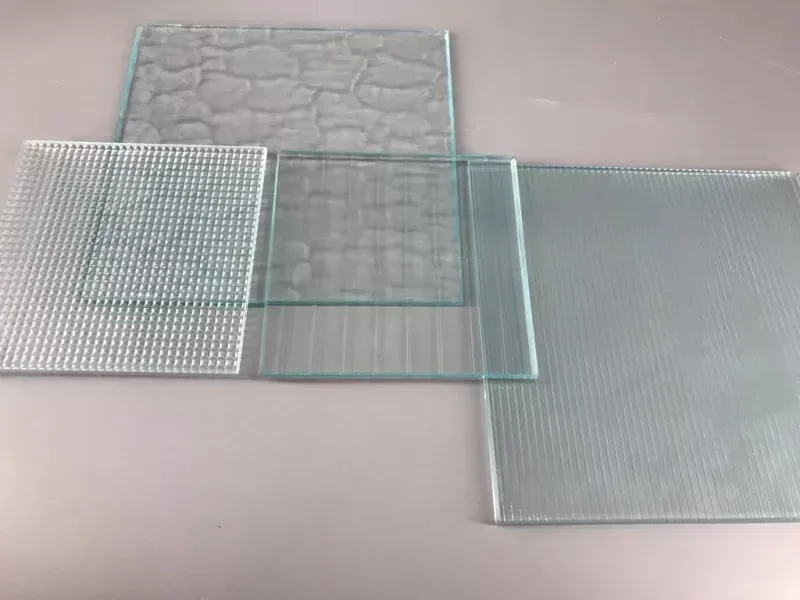
These three names describe the surface, not the process. Hammered glass has a dimpled look. Rippled glass has soft, wavy movement. Ribbed glass has parallel lines, often vertical. GLAZART's KilnArt samples show all three.
Texture does three jobs in an interior:
- It diffuses sight lines. Hammered and rippled finishes soften what's behind the glass.
- It catches light. Ribbed profiles throw long lines of highlight as you walk past.
- It hides fingerprints better than smooth glass. That helps in busy corridors and lift lobbies.
Privacy changes with the pattern and the thickness. Always judge it with a real sample at the real distance, not on a desk.
Why Do UAE Designers Specify Kiln Formed Glass?
In 2026, Mordor Intelligence reported that renovation and remodelling made up 68.05% of the UAE interior design market in 2025. Most projects rework an existing space. Designers need surfaces that add character without heavy structural change.
Kiln formed glass fits that brief. Four reasons come up again and again:
- Texture you can't get from flat glass. The pattern is part of the glass, not a layer on top.
- Privacy with light. Textured glass screens the view but still passes daylight.
- Tints. GLAZART offers selected body tints in green, bronze and grey.
- Custom work. GLAZART provides more than 20 standard textures and can make custom ones.
Specifiers often treat textured glass as a finish. It's closer to a component. Thickness, texture depth and fixings all affect each other, so the submittal needs more detail than a paint or laminate would. For a wider comparison of wall treatments, read our guide to glass feature walls and partitions in Dubai.
Does Kiln Formed Glass Meet UAE Safety Requirements?
In 2026, Element's testing guidance states that the UAE Fire & Life Safety Code makes it mandatory for glass used in buildings to be tested and classified to BS EN 12600. Textured and kiln formed glass is no exception. A decorative surface doesn't exempt it.
BS EN 12600 uses a pendulum impact test. Its classes run from 1B1 (highest) to 3B3. Dubai Municipality also publishes a procedure for certifying glazed glass against the Al Sa'fat and Dubai Building Code.
GLAZART states that its cooling process allows toughening to international standards and successful lamination. That's useful, but it's a claim, not a certificate. The report should cover the actual build: glass thickness, texture and any lamination.
Questions to put to your supplier:
- Which impact class does this exact build achieve?
- Is the panel toughened, laminated or both?
- Can you provide a test report or certificate for the submittal?
- Does the texture depth change the thickness at the thinnest point?
Our FAQ page answers more questions on toughening and certification.
Where Does Kiln Formed Glass Work Best?
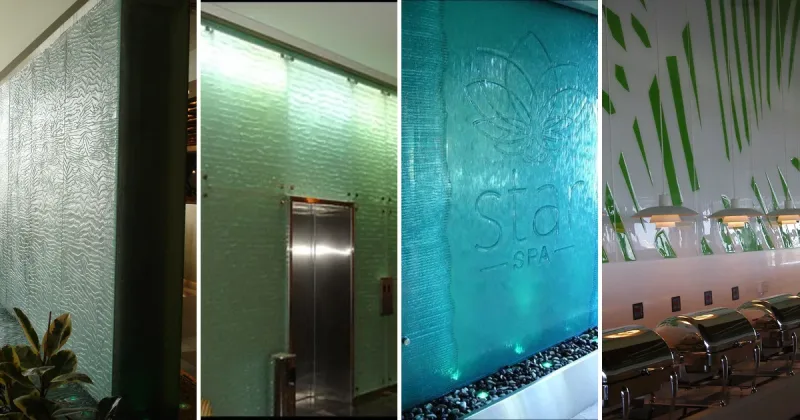
GLAZART lists feature walls, water features, partitions, frameless doors, screens, vanity tops, ceilings, flooring, balustrades and signage for KilnArt. Browse the full applications list, including feature walls and glass partitions. Match the texture to the setting.
| Application | Why It Works | Check Before Specifying |
|---|---|---|
| Hotel feature walls | Relief and light play | Backlighting, panel layout |
| Office partitions and screens | Privacy plus daylight | Impact class, acoustic needs |
| Frameless doors | Soft view-through, bold surface | Thickness, hinge and lock fixings |
| Vanity tops and water features | Texture catches light and water | Cleaning, edge finish, support |
| Balustrades and flooring | Decorative and protective | Structural design, load and slip requirements |
| Signage and backgrounds | Texture works as a backdrop | Lighting, legibility |
Anything that carries load, such as balustrades or flooring, needs structural design by the project engineer. The decorative texture doesn't replace that work.
What Should You Know About Thickness, Tints and Finishes?
Thickness and finish shape both the look and the price. GLAZART's textures are available up to 15mm thick. Selected body tints come in green, bronze and grey. The finished glass can also take sandblasting or Allure colour on selected surfaces (KilnArt).
Fixing options matter on site. GLAZART can provide holes, flat spots, cutouts and countersunk holes for alternative fixing. Confirm these on the shop drawings, because they can't be added after firing.
One warning from GLAZART deserves attention. Images may not overlap from panel to panel because of the moulding process. On a large wall, the pattern can break at every joint. Review the layout early, and treat joints as part of the design.
What Should You Check Beyond Looks?
Kiln formed glass is a decorative product first, so confirm any performance claim with the supplier. Three points come up most often on UAE projects.
- Acoustics. Thick glass helps, but a texture alone doesn't give an acoustic rating. If a partition needs a specific Rw figure, ask for measured data on the exact build.
- Fire. Decorative kiln formed glass isn't fire-rated glazing unless a tested system says so. Where a fire rating is required, use certified fire-resistant glass and check Civil Defence requirements.
- Cleaning and slip. Deep texture holds dust and soap. On floors and stair treads, ask for slip data before you commit.
Treat the textured glass as the visual layer. Specify any acoustic or fire performance through a tested assembly.
How Should You Choose the Right Texture?
Choose by light, privacy and environment, then lock the sample before you order. Five questions settle most choices:
- How much privacy do you need? Test the sample at the real viewing distance.
- How will it read in your lighting? Daylight and downlights show texture very differently.
- Is it backlit? Deep relief can glow beautifully or look patchy.
- What are the panel sizes and joints? Remember that patterns may not match across panels.
- What is the environment? Public corridors, wet areas and floors need different builds.
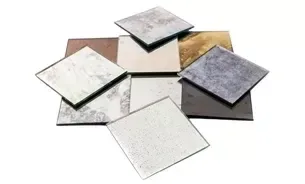
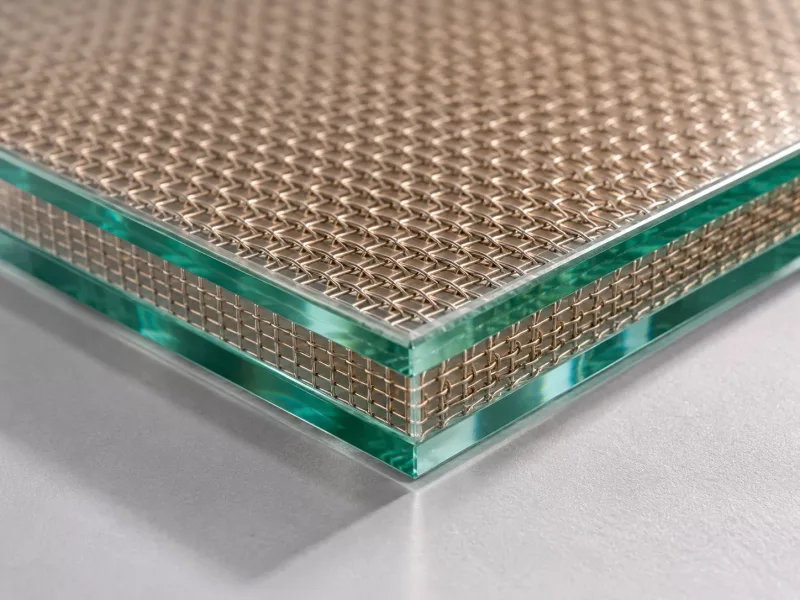
GLAZART's design and services team can help you narrow the choice and prepare drawings. If you're comparing materials, GLAZART's other ranges cover different looks: MetalArt for woven metal laminates, MeshArt for fabric and mesh laminates, PatArt for pattern glass and MirrorArt for mirror. See the full list on the products page.
How Does the Order Process Work in the UAE?
Request samples early, share project drawings, then confirm thickness, texture and fixings. GLAZART makes its glass to order in Dubai, and takes care of installation, fixtures and fittings, or offers technical advice if the client installs the glass (GLAZART). That matters for fit-out and interior contractors who need one party accountable for both supply and fixing.
A practical timeline looks like this:
- Sample selection. Pick the texture and tint, then view them on site.
- Technical submittal. Confirm build, thickness and test documents.
- Shop drawings. Fix panel sizes, joints, holes and cutouts.
- Production. Made to order, so lead time depends on texture and size.
- Delivery and installation. Coordinate with the wider fit-out programme.
Ask for a written lead time. A fired panel can't be reworked, so every cutout and hole must be final before production.
Frequently Asked Questions
What is kiln formed glass?
Kiln formed glass is glass shaped by heat and gravity in a kiln. Fusing, slumping and casting are the main methods. GLAZART's KilnArt panels are formed over moulds and fired to 770°C.
What's the difference between fused, slumped and cast glass?
Fused glass joins pieces together while keeping their shape. Slumped glass softens and sags into a mould. Cast glass melts and takes the mould's shape. Confirm with your supplier which method suits your design.
Are hammered, rippled and ribbed glass the same as kiln formed glass?
Not exactly. Hammered, rippled and ribbed describe the surface texture. Kiln forming is one way to make a textured surface with real relief, as in GLAZART's KilnArt range.
Does kiln formed glass need to be tested to BS EN 12600?
Yes. The UAE Fire & Life Safety Code requires glass used in buildings to be tested and classified to BS EN 12600. Ask for a report on the exact build, because results depend on thickness and construction.
How thick can textured kiln formed glass be?
GLAZART textures are available up to 15mm thick. Selected body tints come in green, bronze and grey, and surfaces can be sandblasted or finished with Allure colour.
Can I use kiln formed glass for flooring and balustrades?
GLAZART lists flooring and balustrades among KilnArt applications. For anything structural, confirm the build, thickness, slip rating and fixings with the project engineer and your supplier before specifying.
Can I get custom textures?
Yes. GLAZART offers more than 20 standard textures and can supply custom ones. Share your drawings early, and see design and services for how the process works.
Conclusion
What is kiln formed glass? It's glass shaped by heat and gravity in a kiln, so you get real relief, depth and texture that flat glass can't match. Fused, slumped and cast describe different methods. Hammered, rippled and ribbed describe the surface. KilnArt is GLAZART's range, made to order in Dubai. The best results come from a few early decisions. Choose the texture for the space, plan the panel joints, ask for BS EN 12600 documentation on the exact build and approve a sample in real light.
To recap:
- Kiln formed glass is shaped in a kiln; texture names describe the look.
- UAE building glass must be tested and classified to BS EN 12600.
- Textures may not match across panels, so plan joints early.
- Don't assume acoustic, fire or slip performance without a test report.
Ready to start? Explore the KilnArt range, browse all applications, read the GLAZART journal or get in touch with your drawings. You can also call +971 4 337 3400 or email info@glazartworld.com.